
Great Lakes · Ontario
Point Pelee National Park
Canada's southernmost mainland — and a world-class migration funnel.
Province
Ontario
Established
1918
Size
15 km²
Coordinates
41.95°, -82.52°
Family friendliness
Hidden gem
Photography
Overview
About Point Pelee National Park
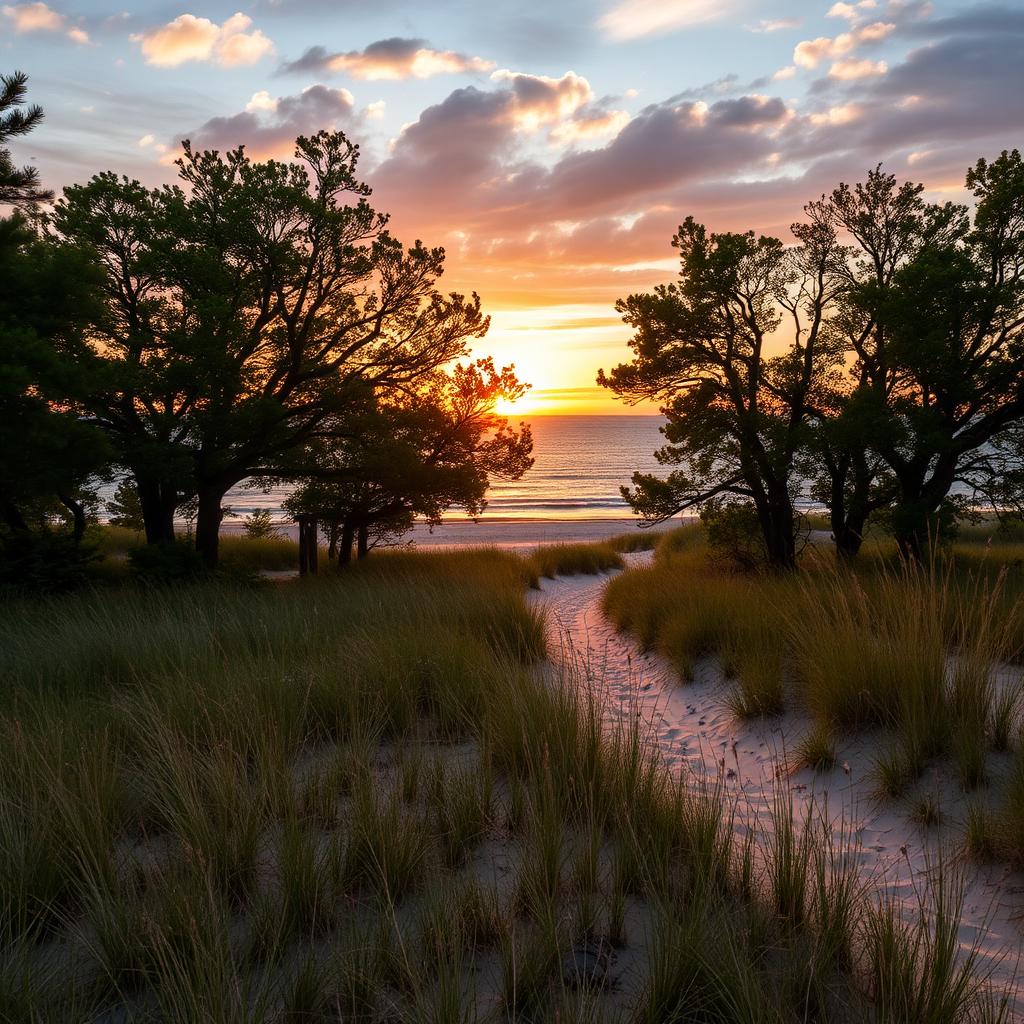
A sand spit thrusting into Lake Erie, Point Pelee is on the same latitude as northern California. Spring brings warbler migration that draws birders worldwide; fall delivers the monarch butterfly mass departure.
Why visit
- Spring warbler migration (May)
- Monarch butterfly fall gathering
- Carolinian forest — Canada's rarest ecosystem
- Marsh boardwalk through cattail wetlands
Things to do
Plan your days.
Tip Trail to Canada's southernmost point
hiking
Marsh Boardwalk
interpretive
Spring bird festival
wildlife
DeLaurier Homestead trail (history)
interpretive
Camping
Camping in the park.
- No vehicle camping in the park itself — use nearby private campgrounds or Wheatley Provincial Park
Best time to visit
- Spring
- April–May: peak warbler migration.
- Summer
- June–August: hot, humid, family beach time.
- Fall
- September–October: monarch butterflies.
- Winter
- Quiet but mild for southern Ontario.
- Peak
- Early to mid-May for birders.
- Shoulder
- September or October.
Location
Find Point Pelee National Park on the map.
41.950°, -82.517° · Ontario, Canada.
Wildlife
What you'll see.
Spring at the Tip; fall along the eastern shore for monarchs.
Common species
Monarch butterfly · Eastern fox snake · Painted turtle
Signature species
Prothonotary warbler · Bald eagle · Monarch butterfly
Wildlife safety
Snakes are non-venomous but protected; observe and leave alone.
Nearby communities
Where to base yourself.
- Leamington
- Kingsville
Nearby attractions
- Pelee Island ferry
- Jack Miner Bird Sanctuary
Suggested itineraries
Pick a length.
weekend
Spring birding weekend
Two mornings on the Tip Trail, one marsh boardwalk.
family
Family monarch weekend
Mid-September on the eastern shore.
Frequently asked
Common questions about Point Pelee National Park.
Can I camp in Point Pelee National Park?+
Point Pelee National Park does not operate traditional drive-in campgrounds. Backcountry camping or stays in nearby communities are the standard options.
Do I need reservations to visit Point Pelee National Park?+
Reservations are strongly recommended for summer weekends; a portion of sites may remain first-come, first-served.
Are dogs allowed?+
Yes — dogs are welcome on a leash (max 3 m) throughout the park, but must be supervised at all times and kept off closed trails and beaches with wildlife restrictions.
Is Point Pelee National Park family friendly?+
Our family score is 9/10. Excellent for families — wide trails, interpretive programs and accessible viewpoints.
When is the best time to visit Point Pelee National Park?+
Early May for warblers; September for monarchs. Shoulder seasons reward visitors with fewer crowds and softer light, while winter opens its own set of opportunities (or, in the far north, closes road access entirely).
What wildlife can I see?+
Signature species include warblers, monarch butterflies and bald eagles. Always keep at least 30 m from large mammals and 100 m from bears; carry bear spray on backcountry trails.
Can I bring an RV?+
RV access is limited or unavailable; this park is best explored by tent, backcountry travel or day trips from nearby communities.
How many days should I spend here?+
One to two days.
Nearby parks
Combine your trip.


Nearby campgrounds